
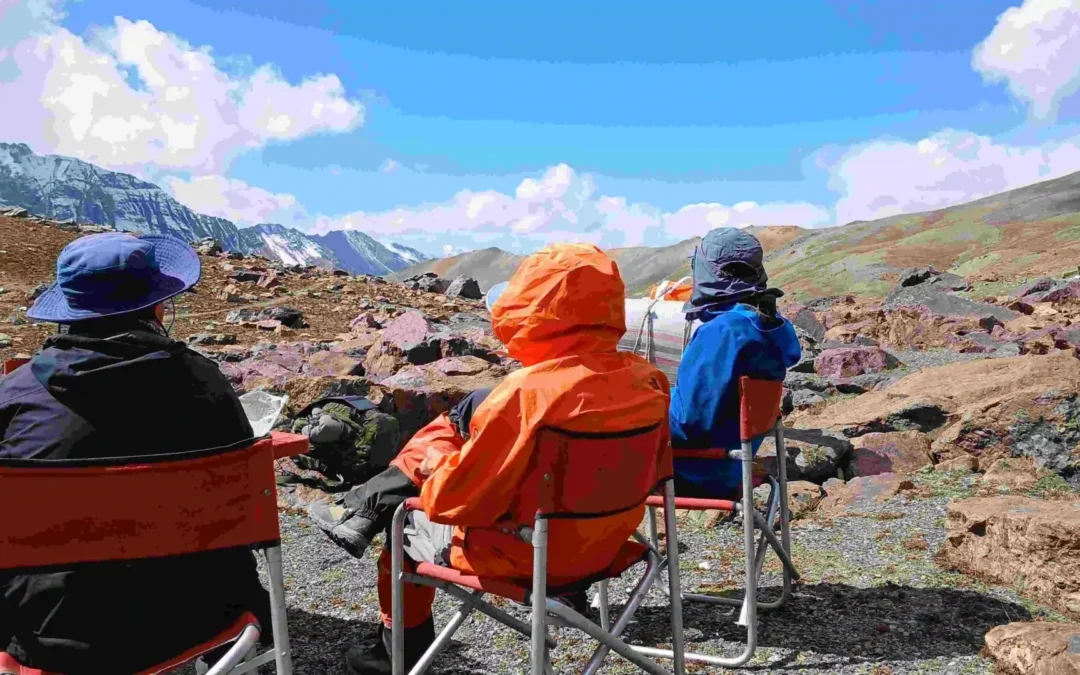
Explore the hidden Hindukush of Pakistan through remote mountain valleys, historic passes, traditional villages, spectacular autumn landscapes and authentic encounters with local communities.
There are places in the mountains that you visit for their famous peaks, and there are places you remember for everything you experience along the way. The Hindukush is one of those special places.
During our 22-day expedition from Islamabad through the remote valleys of Gilgit-Baltistan, my clients experienced a side of Pakistan that many international travellers have yet to discover. We crossed three mountain passes, travelled through eight valleys, camped beside a beautiful alpine lake, walked through golden autumn forests and met local people whose lives remain closely connected to the mountains.
Our journey took us through the landscapes of Darmandir, Ghamubar and Attar, eventually bringing us to Darkot, a historic village surrounded by dramatic peaks and some of the most promising trekking routes in the region.
My clients were particularly impressed by Darkot and its surroundings. Beyond its natural beauty, the village has a fascinating connection to historic mountain travel, nineteenth-century geographical exploration and the strategic rivalries that shaped Central Asia.
For me, this expedition was another reminder of why the Hindukush deserves much greater attention from trekkers, cultural travellers, photographers and explorers.
At Trips Nomad Adventure, we believe the best journeys are not simply about reaching a destination. They are about discovering new landscapes, meeting people, learning about local cultures and experiencing the spirit of a place.
The Hindukush offers all of this, often within a single trekking expedition.
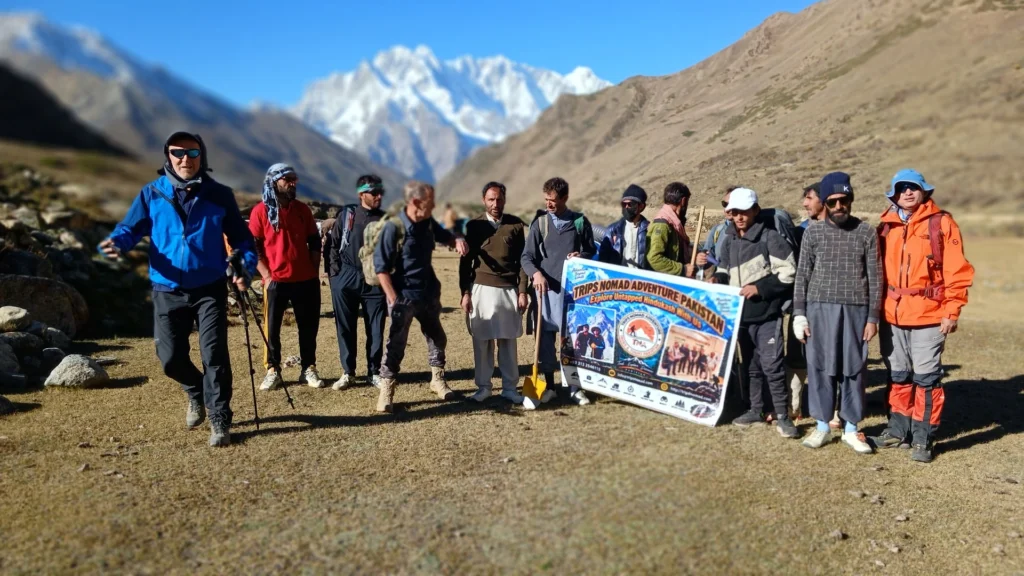
Why Explore the Hindukush Instead of Following the Usual Trekking Routes?
Pakistan is internationally famous for its Karakoram and Himalayan mountains. Travellers come from around the world to see K2, walk towards the Baltoro Glacier, visit Fairy Meadows and experience the spectacular scenery of the northern valleys.
These destinations are extraordinary, and each mountain region has its own character.
However, trekking in the Hindukush around Yasin, Darkot and Ishkoman offers a different kind of experience. Here, the journey can combine high mountain passes with traditional villages, summer settlements, alpine lakes, forests, glaciers and encounters with local communities.
The scenery changes as you move from one valley to another. You may begin the morning among traditional mountain houses, climb towards a rocky pass in the afternoon and spend the evening beside a river beneath towering peaks.
The following day, the landscape may change completely as you descend through pine, juniper and birch forests.
This combination of natural beauty and cultural discovery is what makes the Hindukush so rewarding.
Rather than focusing on one famous mountain or a single base camp, our expedition allowed us to experience the wider mountain environment and the people who call it home.
For travellers seeking off-the-beaten-path trekking in Pakistan, this is an experience worth considering.
Our 22-Day Hindukush Exploration: Three Passes and Eight Valleys
Our journey began in Islamabad, where we welcomed our international guests before travelling north through Chilas and Gilgit to Gahkuch, the administrative centre of Ghizer District.
From there, we entered the mountains and began our exploration of remote valleys, traditional settlements and high mountain routes.
Over the course of the expedition, we crossed three main passes:
- Darmandir Pass, approximately 4,255 metres
- Ghamubar Pass, a challenging crossing through rugged mountain terrain
- Attar Pass, approximately 4,650 metres
We travelled through eight valleys, experiencing the changing landscapes, communities and seasonal environments of the Hindukush.
The journey included mountain lakes, high pastures, traditional summer houses, glacial terrain, rocky summits and colourful autumn forests. Every section had something different to offer.
From Islamabad to the Mountains of Ghizer
Our journey began with the long drive from Rawalpindi towards Chilas, followed by the spectacular route through Gilgit to Gahkuch.
The drive itself was part of the adventure. As we travelled north, the landscapes changed from busy towns and main roads to dramatic mountain scenery, winding valleys and rivers flowing beneath enormous peaks.
After arriving in Gahkuch, we took a short hike to Upper Gahkuch to stretch our legs and prepare for the trekking days ahead.
It was a welcome introduction to the region and an opportunity to slow down after the journey from Islamabad.
Ishkil Camp: Rocky Peaks and Traditional Mountain Life
From Gahkuch, we drove towards Darmandir and continued on foot to Ishkil Camp at approximately 3,100 metres.
One of the most striking features of this area was Saidan Chock, a rocky peak with sharp, dramatic summits reminiscent of the famous Trango Towers in the Baltoro region.
The surrounding landscape was magnificent, with rugged slopes, rocky peaks and a peaceful atmosphere far from the usual tourist routes.
We also came across a small settlement of Gujjar nomads, with approximately 20 houses according to our observations.
These encounters added a human dimension to the landscape. The mountains were not simply scenery around our camp; they were part of a living environment used by local communities and their livestock.
Despite a cold evening and light rain, my clients were happy and enjoying their first days in the remote Hindukush.
Darmandir Lake: A Beautiful Mountain Camp
The following day, we continued towards Darmandir Lake, reaching our campsite at approximately 3,800 metres.
The trail passed traditional summer houses and small settlements used by local families during the warmer months. These seasonal homes reflect the close relationship between mountain communities, grazing lands and the changing seasons.
Near Bojirhing, we crossed a bridge beside summer houses and a small playground. Along the way, we passed places known locally as Khudong Gali, Khirono Ganja, Toqy Hat and Khanyen Bak.
The landscape gradually opened as we climbed towards the lake.
Darmandir Lake was one of the most memorable places of the expedition. Sharp rocky summits rose around the water, creating a dramatic mountain setting.
We spent time walking beside the lake, enjoying the scenery and looking towards Darmandir Pass, which lay ahead on our route.
It was the kind of place that makes a demanding mountain journey worthwhile: quiet, beautiful and surrounded by landscapes that feel a long way from everyday life.
Crossing Darmandir Pass
We left the lake the following morning and began climbing towards Darmandir Pass.
The initial section was steep, but the trail became more gradual as we gained elevation. We reached the pass at approximately 4,255 metres after around two hours and 15 minutes of ascent.
From the top, we enjoyed impressive views of the surrounding mountains, including Thui I and Thui II, Darkot Peak, Chikar Zom and distant Kayo Zom.
After taking time to appreciate the scenery, we descended towards the colourful slopes known as Rainbow Hills before continuing to Makuli.
This was our first major mountain crossing of the expedition, combining high-altitude trekking with panoramic views across the surrounding valleys.
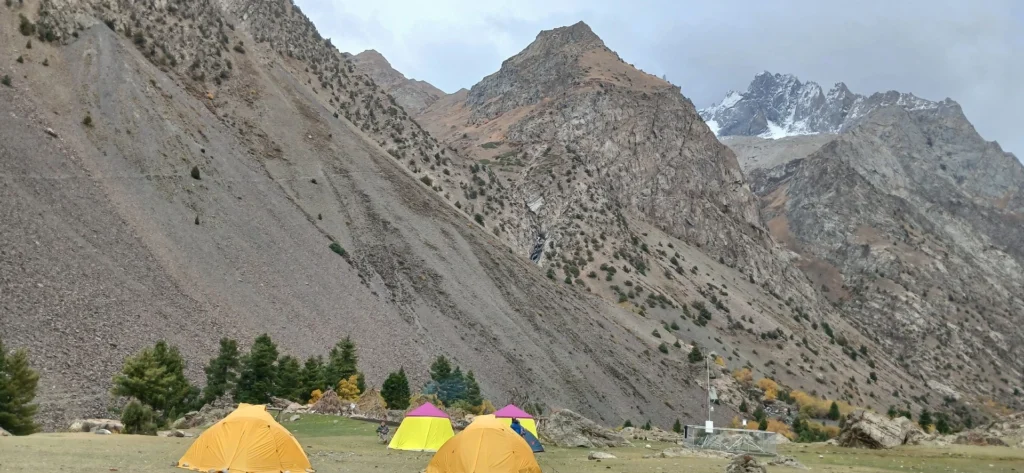
Ghamubar: A Challenging Mountain Crossing
From Yasin, we continued towards Thui and entered the remote Daspar region, beginning another section of our journey through the Hindukush.
We passed through Sandoqe Bol Hakal and Gohicho Kutu as autumn colours began appearing across the mountainsides.
The next stage was our crossing of Ghamubar Pass.
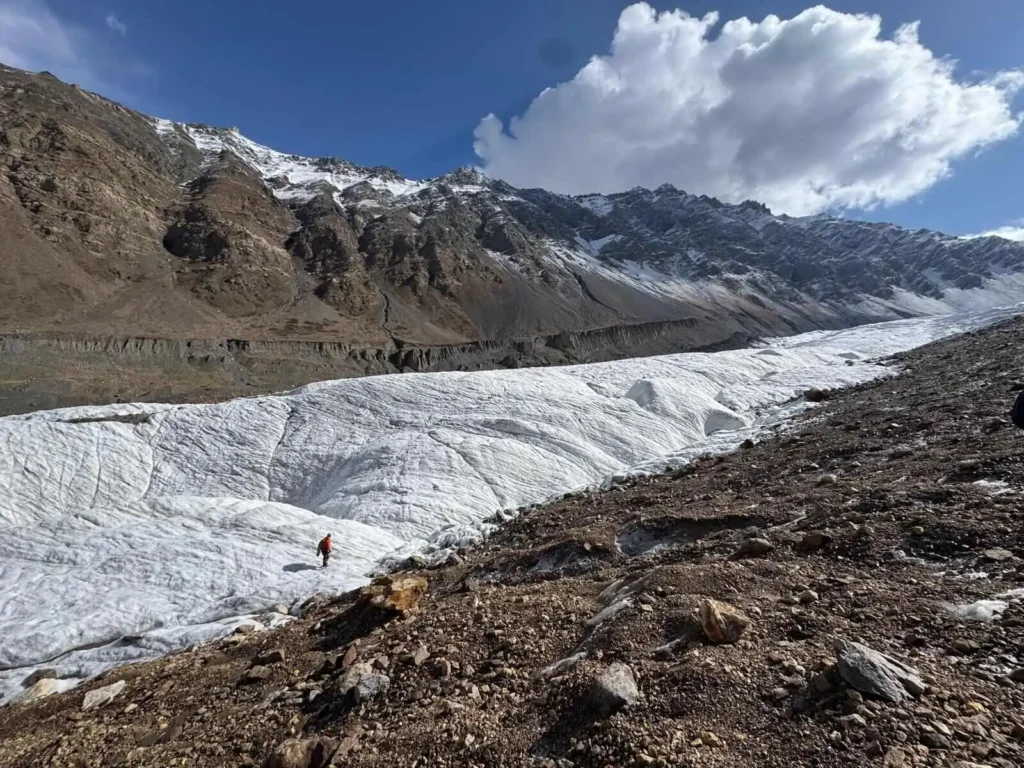
We initially followed the Ghamubar Glacier route, but the glacier terrain had changed considerably, making the walk more difficult than expected. It took longer than planned to reach the foot of the pass, followed by a demanding ascent.
We eventually reached the pass late in the afternoon and continued down to Thum Basakish, our campsite at approximately 3,200 metres.
This was one of the most challenging days of the expedition. It reminded us that remote trekking requires flexibility, careful route assessment and experienced local support.
In the Hindukush, the mountains are beautiful, but they also demand respect.
Darkot: A Historic Village Surrounded by Extraordinary Mountains
After descending from Ghamubar, we reached Darkot, one of the most memorable destinations of our journey.
Darkot lies in the upper Yasin Valley of Gilgit-Baltistan and is associated with the historic Darkot Pass, a mountain crossing connecting the Yasin region with the Upper Chitral side of the Hindukush.
For my clients, Darkot was much more than a village along our route. They were genuinely impressed by its peaceful setting, the surrounding mountains and the possibilities for further exploration.
The village offered a welcome opportunity to slow down after several demanding days in the mountains.
We spent a buffer day exploring the surroundings and planning walks towards the hot spring and the Darkot Pass area.
For me, this was an important part of the expedition because it revealed how much more there is to discover around Darkot.
The village has the potential to become a wonderful base for short day hikes, historical exploration, photography and multi-day trekking expeditions.
Darkot: Where Mountain Beauty Meets History
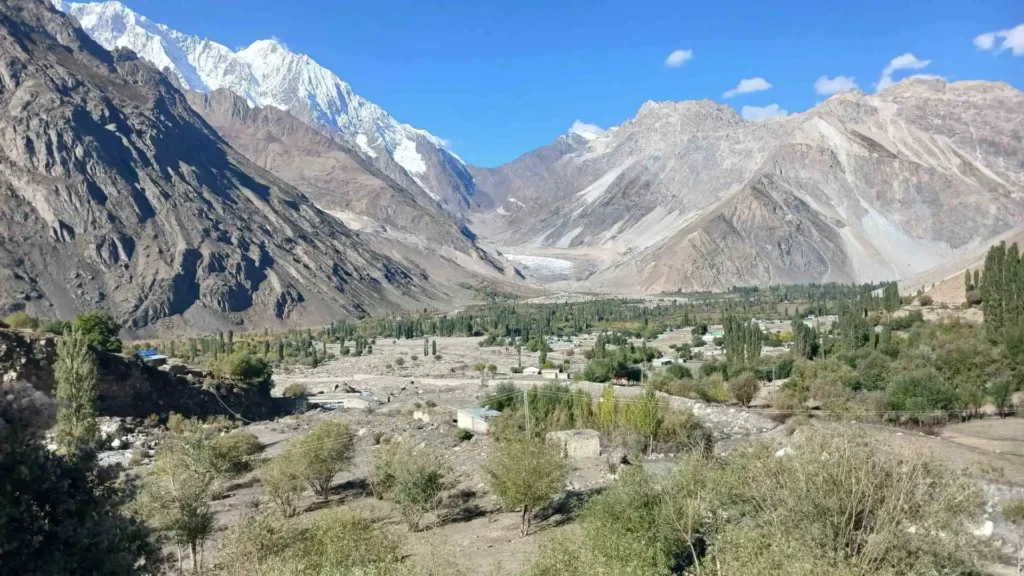
Darkot is not only a destination for trekking. It is also connected to a much wider history of mountain travel, geographical exploration and political rivalry across Central Asia.
For centuries, mountain passes in this region provided connections between communities on different sides of the Hindukush. They were used for local movement and helped connect the upper valleys with neighbouring mountain regions.
Darkot’s location makes it particularly interesting for travellers who enjoy discovering the stories behind the landscapes they visit.
Ancient Central Asian Connections and General Gao Xianzhi
The history of northern Pakistan reaches back many centuries. During the eighth century, the region was connected to wider political and military developments across Central Asia.
One important historical figure was Gao Xianzhi, a general of the Tang dynasty who led military campaigns across parts of Central Asia and the Pamir region.
In 747 CE, his campaigns extended Tang influence into the Gilgit region. These events formed part of the wider competition between political powers seeking influence over strategic mountain corridors and routes connecting Central and South Asia.
The year 753 CE also falls within this period of significant political activity in Central Asia.
Although these events provide an important historical context for the region, a direct connection between Gao Xianzhi and a specific route through Darkot in 753 CE requires further documentary evidence.
This distinction is important when exploring the ancient history of the Hindukush. The wider region had a long history of strategic connections, but individual routes and historical events must be established through reliable sources rather than assumption.
For visitors today, this broader history adds another layer of interest to a landscape already rich in natural beauty.
Darkot and the Great Game: British and Russian Rivalries
During the nineteenth century, the mountain regions of northern Pakistan and Central Asia attracted increasing attention from the British and Russian empires.
This period of strategic competition became known as the Great Game.
British explorers, surveyors and political agents travelled through remote valleys to map mountain routes, understand local political relationships and gather geographical information.
The approaches to the Pamirs and the Hindukush were particularly significant because of their strategic location between Central Asia and the Indian subcontinent.
Darkot Pass formed part of this wider geographical setting. Its location towards the Pamirs made the region interesting to explorers studying the mountain frontiers.
Historical accounts and local traditions may contain references to Russian movements or the possibility of invasion in the wider region. However, a specific Russian invasion of Darkot should not be presented as an established event without reliable supporting evidence.
What can be said confidently is that the region was part of a strategically important frontier during a period when British and Russian interests competed across Central Asia.
This historical background makes Darkot an especially interesting destination for travellers who enjoy combining trekking with history.
George W. Hayward: The Explorer Murdered Near Darkot in 1870
One of the most significant historical events associated with Darkot is the death of George Jonas Whitaker Hayward, a British explorer and geographer.
Hayward travelled through Yasin during his attempts to explore the Pamir region, which remained poorly documented by European geographers during the nineteenth century.
His journeys took him through difficult mountain terrain and into areas where local political relationships were complex and sometimes tense.
On 18 July 1870, Hayward was murdered near Darkot while travelling towards the Pamirs.
His death became one of the best-known episodes in the history of geographical exploration in the Hindukush and the wider Great Game period.
The precise circumstances and political responsibility for his murder have been debated by historians. The event is commonly associated with tensions involving local political authorities and the wider strategic rivalries of the time, but the details should be treated carefully.
Hayward’s death illustrates the dangers faced by nineteenth-century explorers, who travelled through unfamiliar landscapes while navigating difficult relationships with local rulers and communities.
Today, his story adds a powerful historical dimension to Darkot. Visitors walking through the village and looking towards the surrounding passes are exploring the same wider mountain landscape that attracted explorers more than 150 years ago.
For travellers interested in geography, history and exploration, this connection makes Darkot much more than a beautiful mountain destination.
It becomes a place where the landscape and the stories of the past come together.
Darkot’s Hidden Potential: Nine Places to Explore
One of the strongest impressions I took away from our expedition was how much potential Darkot has for future trekking and exploration.
Many travellers visit northern Pakistan for well-known destinations, but Darkot could offer a different experience: a collection of shorter walks and longer expeditions that combine natural scenery, local culture and historic mountain routes.
The following destinations are worth investigating when planning an adventure in the area.
1. Ghamubar: Dramatic Peaks and Remote Mountain Terrain
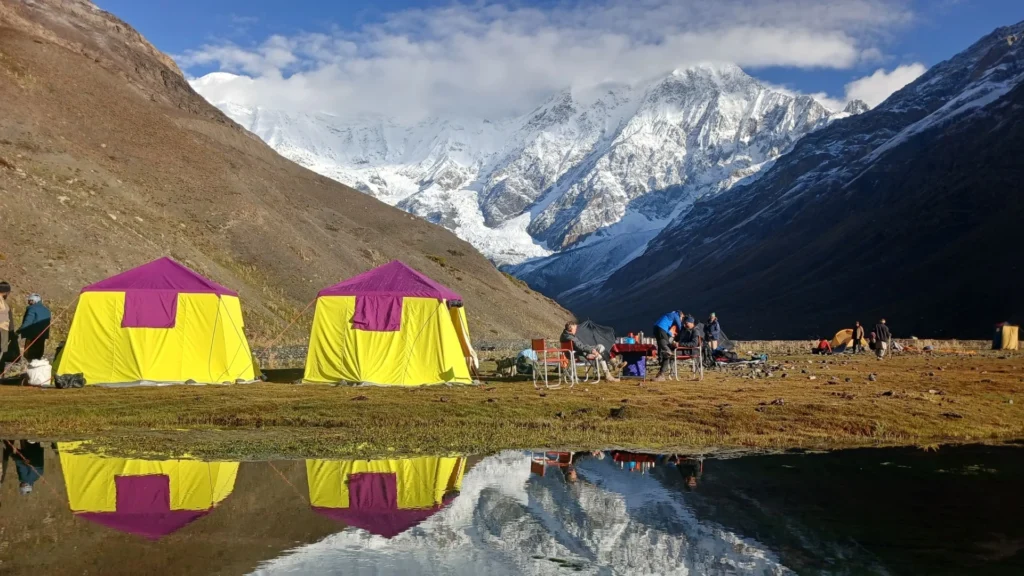
Ghamubar offers a demanding mountain environment with rugged peaks, glacial terrain and opportunities for multi-day trekking.
Our own crossing demonstrated both the beauty and the challenges of the region. Changing glacier conditions made route selection particularly important.
For experienced trekkers, Ghamubar can be part of a longer expedition connecting remote valleys, subject to suitable conditions and local guidance.
2. Darkot Pass: A Historic Route into the Mountains
Darkot Pass is one of the region’s most historically significant mountain crossings.
Its association with George Hayward and nineteenth-century exploration makes it particularly appealing to travellers interested in history as well as adventure.
The route also offers the opportunity to experience high mountain scenery and the dramatic landscapes of the Hindukush.
3. Darkot Hot Spring: A Relaxed Day Out
The hot spring near Darkot could provide a more relaxed experience for travellers who want to explore the area without committing to a demanding high-altitude trek.
A visit can potentially be combined with a walk through the surrounding countryside and time in the village.
Exact access conditions and the best walking route should be confirmed locally.
4. Anisare Bar: A Lesser-Known Mountain Destination
Anisare Bar is one of the local destinations worth investigating as part of future Darkot trekking programmes.
Lesser-known side valleys and high pastures can provide rewarding opportunities for nature lovers and trekkers who prefer quiet routes.
Further local reconnaissance is needed to establish the most suitable approach, walking time and camping options.
5. Attar Pass: Connecting High Mountains and Forests
Attar Pass was one of the highlights of our expedition.
We climbed towards the pass through increasingly rugged terrain, encountered snow near the top and descended a steep scree slope before continuing towards Attar Lake.
Beyond the lake, the landscape changed dramatically as we entered forests of birch, juniper and pine.
The golden birch leaves were at their autumn peak, creating a beautiful contrast with the surrounding mountains.
This route is a wonderful example of the landscape diversity that makes Hindukush trekking so special.
6. Punji Pass: Further Exploration Around Ishkoman
Punji Pass, referred to locally in our route planning as Ishkoman Pass, is another potential option for exploring the wider mountain region.
It could appeal to experienced trekkers interested in less-travelled connections between valleys.
The exact route alignment, elevation, permissions and seasonal accessibility should be confirmed before an itinerary is offered to visitors.
7. Dholing: Discovering the Lesser-Known Valleys
Dholing is another destination worth investigating for future guided walks and multi-day trekking routes.
The wider region offers opportunities to explore landscapes away from established tourist routes and learn more about the relationship between local communities and their mountain environment.
Detailed route reconnaissance will help determine whether Dholing is best suited to a day hike or a longer expedition.
8. Polish Pass: Exploring Towards Thui Valley
Polish Pass offers further potential for exploring the connections between Darkot and Thui Valley.
For experienced trekkers, such routes can provide a rewarding combination of high mountain scenery, remote valleys and traditional settlements.
The precise route and access arrangements should be verified locally before planning a crossing.
9. Khaltar Lake: A Destination for Nature Lovers
Khaltar Lake is another destination worth investigating for travellers interested in alpine scenery, photography and peaceful mountain camps.
Before promoting it as a fixed itinerary, the access route, elevation, walking time and camping suitability should be checked with local knowledge.
Together, these nine destinations show why Darkot deserves greater attention. It has the potential to support a range of experiences, from short village walks to demanding multi-day mountain expeditions.
For Trips Nomad Adventure, this is precisely the kind of region where local knowledge, careful route development and responsible tourism can create meaningful opportunities for both visitors and communities.
What Makes Hindukush Trekking Different?
The Hindukush is not simply an alternative mountain range for travellers who have already visited the Karakoram or Himalayas.
It offers its own character and its own rewards.
The experience can be more about moving through a living mountain landscape than following a single established trekking corridor.
Here are some of the features that make this region especially rewarding.
A Journey Through Different Landscapes
The scenery changes throughout the expedition.
Rocky peaks give way to glaciers and alpine lakes. High mountain slopes descend into green valleys, traditional summer settlements and forests.
During autumn, the birch trees turn bright yellow, adding colour to the landscape and creating exceptional opportunities for photography.
This variety means that each day’s walk can feel different from the one before.
Encounters with Local Communities
Our route passed traditional summer houses and small mountain settlements where families spend the warmer months.
These places provided opportunities to observe local life and understand how people use the mountain landscape throughout the year.
Such encounters are an important part of cultural trekking. They remind us that the valleys are not empty wilderness but living environments with traditions, seasonal patterns and communities that have developed a close relationship with their surroundings.
Responsible trekking should respect local customs, seek permission where appropriate and ensure that local guides and service providers benefit from tourism.
A Strong Sense of Exploration
The Hindukush rewards curiosity.
Beyond the established routes, there are side valleys, historic passes, lakes and mountain trails that deserve further exploration.
Some routes require detailed reconnaissance, and not every potential destination is suitable for every trekking group. This is part of the challenge and appeal of exploring a less-developed trekking region.
For experienced travellers, the opportunity to discover lesser-known landscapes can be as rewarding as reaching a famous destination.
Best Time for Hindukush Trekking in Pakistan
The best time to trek in the Hindukush depends on the route, elevation, snow conditions and seasonal weather.
Summer is generally the main period to investigate for high mountain passes. Early autumn can also be beautiful, especially for travellers interested in changing leaf colours and quieter mountain landscapes.
Our September–October 2026 expedition demonstrated both the rewards and challenges of autumn trekking.
We enjoyed golden birch forests, clear mountain views and beautiful colours across the valleys. However, we also experienced hail, rain, fresh snow and slippery terrain near the passes.
Conditions can change rapidly at high altitude, particularly later in the season.
Before booking an expedition, travellers should confirm the latest trail conditions, local access requirements, suitable camping areas and the experience needed for the intended route.
Is Hindukush Trekking Suitable for Beginners?
There are different ways to explore the Hindukush, and not every itinerary requires advanced mountaineering experience.
Short village hikes and lower-valley walks may be suitable for travellers with basic fitness, depending on the trail.
However, multi-day expeditions involving high passes, glacial terrain, steep scree slopes and remote camps require a higher level of preparation.
Our expedition included demanding sections at Ghamubar and Attar passes, where careful pacing and local support were essential.
Before selecting a trek, consider your fitness, previous trekking experience, ability to walk for several hours each day and comfort with high-altitude environments.
For less-experienced travellers, a shorter guided hike around Darkot or a moderate valley trek may be a good introduction before attempting a high mountain crossing.
Explore the Hidden Hindukush with Trips Nomad Adventure
At Trips Nomad Adventure, we believe that exploring Pakistan’s mountains should be about more than reaching a destination.
It should be an opportunity to discover landscapes, meet local people, learn about mountain cultures and experience places that remain relatively unknown to international travellers.
Our experience in Yasin, Ishkoman and the wider Hindukush region allows us to develop journeys that combine mountain scenery, traditional settlements, high passes, alpine lakes and forests.
Darkot is one of the destinations we are particularly excited about. Its historic significance, peaceful atmosphere and surrounding trekking possibilities make it an excellent starting point for further exploration.
Our recent expedition reinforced this belief. My clients were deeply impressed by the village and its surroundings, and I would love to see more travelers discover this remarkable part of Pakistan.
Whether you are interested in high mountain trekking, cultural exploration, photography or the history of the Great Game, the Hindukush has something special to offer.
You do not need to follow the most famous route to experience extraordinary mountains. Sometimes the most memorable journeys are the ones that take you beyond the familiar destinations and into places where nature, culture and history come together.
Discover the hidden Hindukush with Trips Nomad Adventure. Explore the mountains, meet the people, and experience a different side of Pakistan.
Visit Trips Nomad Adventure to explore our trekking experiences and plan your next adventure in northern Pakistan.
Travel with Confidence with SafetyWing Insutance
Adventure travel is full of unforgettable experiences, but unexpected situations can happen along the way. SafetyWing travel insurance can help travellers prepare for certain medical emergencies and other covered travel disruptions, depending on the plan and policy terms. Whether you are trekking in Pakistan, exploring remote mountain valleys or travelling internationally, having suitable travel insurance can provide valuable peace of mind. Before your journey, review the coverage, exclusions and activity limits to make sure your plan suits your adventure.
Frequently Asked Questions About Hindukush Trekking
Where is the Hindukush in Pakistan?
The Hindukush extends into northern and northwestern Pakistan, including parts of Gilgit-Baltistan and the Chitral region. Areas such as Yasin, Darkot and Ishkoman offer opportunities for high mountain trekking, cultural exploration and remote valley travel.
What makes Hindukush trekking different from Karakoram trekking?
Both regions offer extraordinary mountain scenery. The Hindukush around Yasin, Darkot and Ishkoman is particularly attractive for journeys that combine high mountain passes with traditional settlements, forests, lakes and opportunities to meet local communities.
Where is Darkot village?
Darkot is in the upper Yasin Valley of Gilgit-Baltistan, Pakistan. It is known for its mountain scenery and its association with the historic Darkot Pass.
Why is Darkot historically important?
Darkot is associated with historic mountain routes connecting Yasin with the Upper Chitral and Pamir regions. It is also linked to the death of British explorer and geographer George W. Hayward, who was murdered near Darkot in July 1870.
What is the Great Game, and how is Darkot connected to it?
The Great Game was the nineteenth-century strategic rivalry between the British and Russian empires across Central Asia. The wider Hindukush and Pamir region attracted explorers and political agents because of its location. Darkot was part of this broader geographical setting.
Did General Gao Xianzhi travel through Darkot in 753 AD?
Gao Xianzhi was a Tang dynasty general whose campaigns extended Tang influence into the Gilgit region in 747 CE. Although the wider region had important historical connections with Central Asia, a specific route through Darkot in 753 AD requires further historical evidence.
What can visitors do in Darkot?
Depending on local access and conditions, visitors can explore the village, take day hikes, visit the hot spring and plan longer treks towards destinations such as Darkot Pass, Ghamubar and Attar Pass.
How many passes did your expedition cross?
Our September–October 2026 expedition crossed three main passes: Darmandir Pass, Ghamubar Pass and Attar Pass. The journey also included eight valleys, traditional settlements, mountain lakes and beautiful autumn forests.
When is the best time to trek in the Hindukush?
Summer is generally the main season to investigate for high mountain routes. Early autumn can offer beautiful colours, but snow, rain and changing weather can affect access. Conditions should always be checked before departure.
Can I explore the Hindukush with a local guide?
Yes. A knowledgeable local trekking guide can help with route planning, cultural understanding, logistics and decisions about changing mountain conditions. For remote and high-altitude routes, experienced guides and reliable porter support are especially important.