
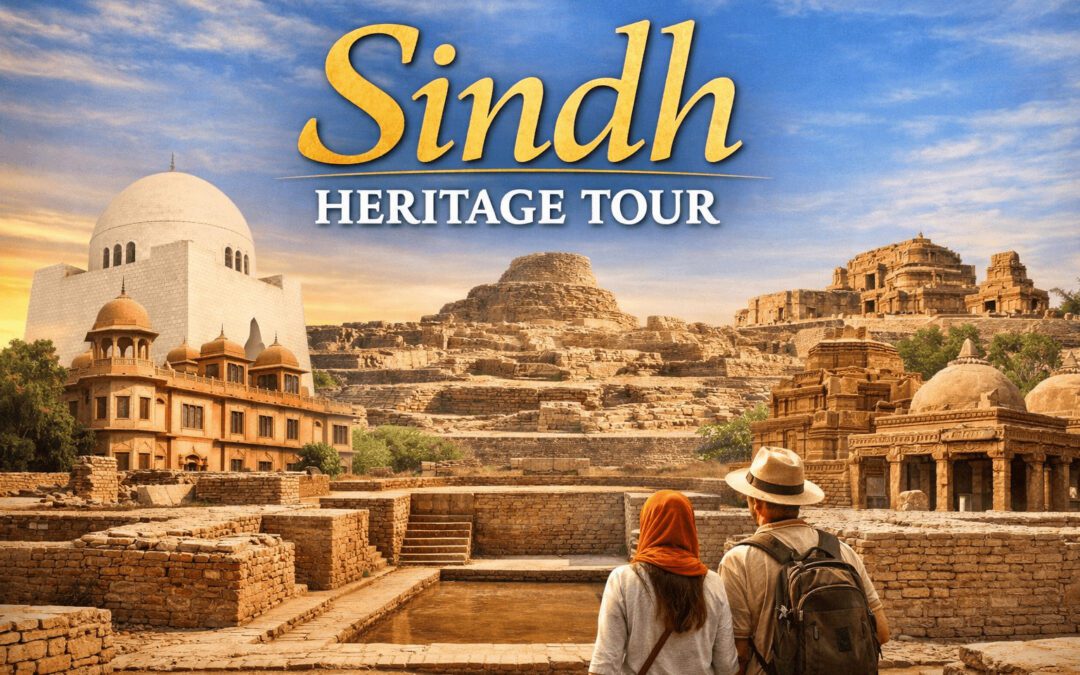
When travelers think of Pakistan, mountains often come to mind. But long before the peaks of the north drew explorers, the plains of Sindh nurtured one of the world’s earliest civilizations.
A Sindh Heritage Tour is not just another sightseeing itinerary, it is a journey into 5,000 years of human history. From colonial-era landmarks in Karachi to the ancient urban brilliance of Mohenjo-daro, this carefully designed Pakistan heritage tour connects modern travelers with the roots of civilization.
Whether you are a retired cultural explorer, historian, archaeology enthusiast, or simply a curious traveler, this route offers depth, authenticity, and unforgettable insight.
Karachi–Where Modern Pakistan Meets Colonial & Cultural History
Karachi is often described as energetic, fast-moving, and diverse. Yet beneath its modern skyline lies a fascinating layer of colonial architecture, spiritual monuments, and museums that introduce visitors to Pakistan’s historical identity.
Mazar-e-Quaid–The Monument of a Nation
The white marble structure of Mazar-e-Quaid dominates the city skyline with quiet dignity. Built in the 1960s, it is the final resting place of Muhammad Ali Jinnah, the founder of Pakistan.
The architecture is minimalist yet powerful, inspired by Islamic design principles and constructed entirely of white marble. The interior chandelier, gifted by China, adds elegance to the solemn atmosphere.
For international visitors, this site provides historical context before exploring older civilizations further inland.
Mohatta Palace–Architectural Elegance of the 20th Century
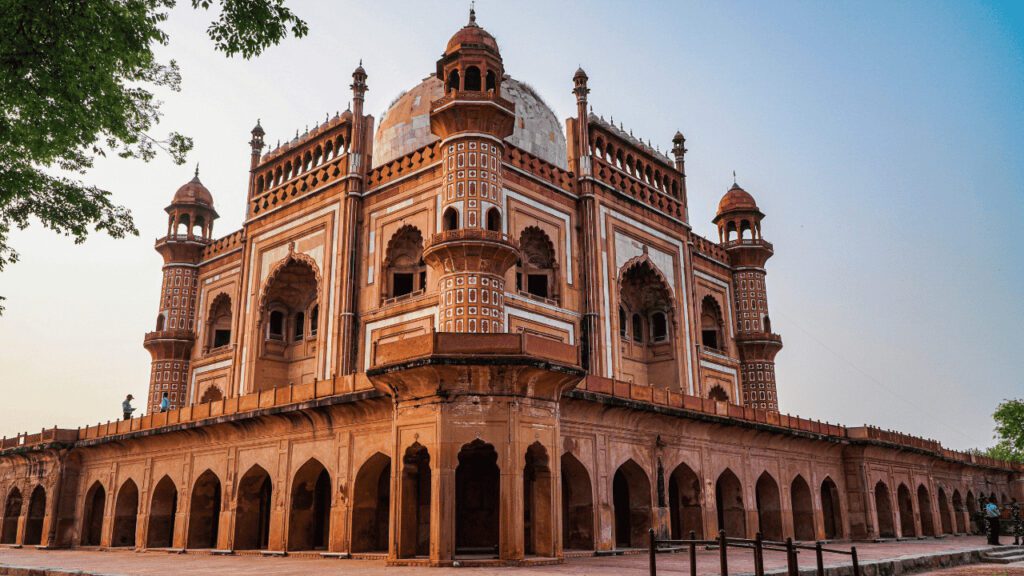
Built in 1927 by a Hindu businessman, Mohatta Palace represents the fusion of Rajput and colonial architectural styles.
Constructed with pink Jodhpur stone and intricate detailing, the palace now serves as a museum showcasing Sindh’s art, textiles, and heritage exhibitions.
Walking through its halls provides insight into pre-partition history and the multicultural roots of Sindh.
Frere Hall-Colonial Karachi Preserved
Frere Hall, built in 1865, reflects British colonial architecture with Venetian Gothic design elements.
Surrounded by gardens and located in the historic Saddar district, it once functioned as a town hall and library. Today it remains a symbol of Karachi’s layered past, from colonial administration to modern civic space.
National Museum of Pakistan–Preparing for Mohenjo Daro
Before embarking on your Mohenjo Daro tour from Karachi, the National Museum provides essential archaeological background.
Artifacts include:
- Indus Valley seals
- Terracotta figurines
- Ancient pottery
- Gandhara sculptures
- Islamic manuscripts
This museum contextualizes the Indus Civilization, making the visit to Mohenjo Daro far more meaningful.
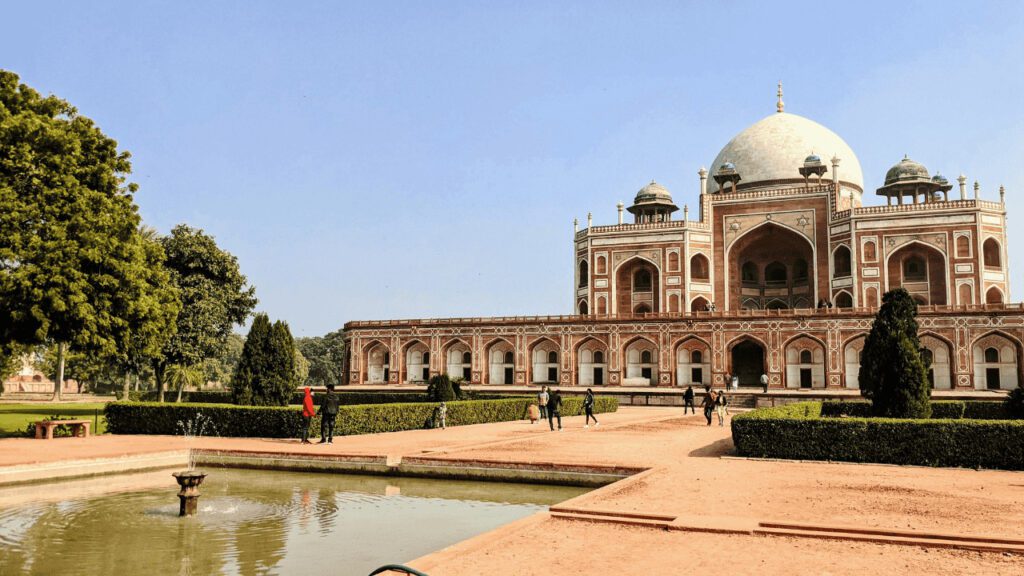
Mohenjo Daro–The 4,500-Year-Old Urban Marvel
Located near Larkana in Sindh, Mohenjo-daro is one of the most important archaeological discoveries in the world.
Recognized as a UNESCO World Heritage Site, it dates back to around 2500 BCE and represents one of the earliest examples of advanced urban planning.
What Makes Mohenjo Daro Extraordinary?
Unlike many ancient ruins that evolved chaotically over time, Mohenjo Daro was meticulously planned.
Urban Grid System
The city was built on a grid pattern, streets intersecting at right angles, something that would not become common in many parts of the world until thousands of years later.
Advanced Drainage System
Each home had access to covered drainage channels, demonstrating remarkable sanitation engineering.
The Great Bath
Perhaps the most iconic structure, the Great Bath is believed to have been used for ritual purification. Its waterproof brick construction remains astonishing even today.
Standardized Brick Construction
The use of uniformly sized baked bricks indicates centralized planning and strong governance.
The Human Side of Mohenjo Daro
Archaeologists discovered toys, jewelry, and figurines that suggest a thriving society engaged in trade, craftsmanship, and daily domestic life.
Interestingly, no massive temples or palaces have been identified, leading scholars to debate how power was organized in this ancient society.
For travelers, walking through the quiet ruins evokes a powerful emotional response — you are literally stepping into one of humanity’s earliest urban experiments.
Makli Necropolis–A City of Tombs and Timeless Art
Near Thatta lies Makli Necropolis, one of the largest funerary sites in the world.
Spanning over 10 square kilometers, Makli contains hundreds of thousands of tombs built between the 14th and 18th centuries.
Architectural Significance
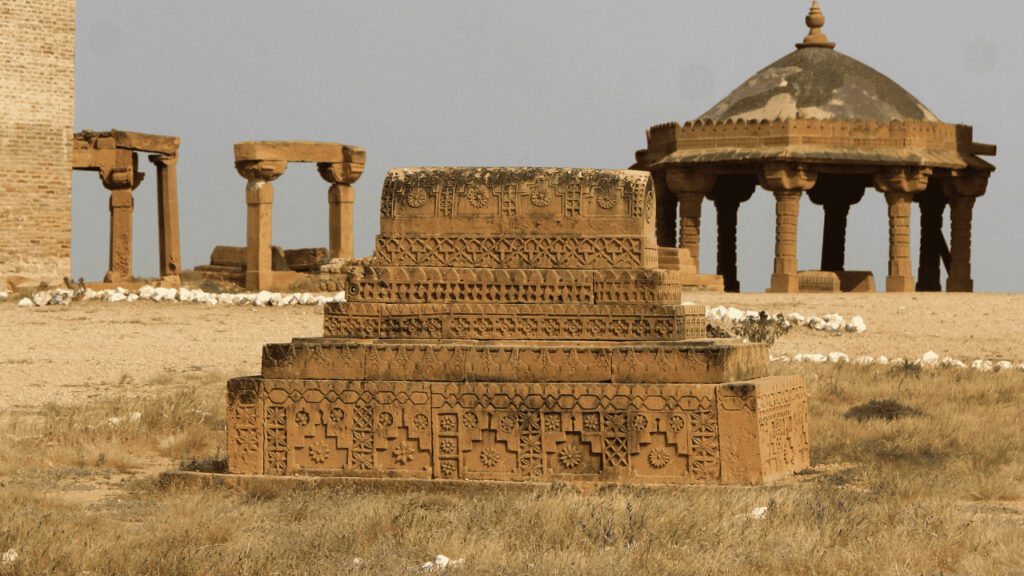
Makli showcases:
- Intricately carved sandstone
- Persian-influenced calligraphy
- Geometric and floral motifs
- Monumental tomb platforms
The tombs belong to kings, Sufi saints, scholars, and noble families of the Samma, Arghun, Tarkhan, and Mughal dynasties.
Walking through Makli feels like walking through an open-air museum of Islamic architecture.
Chaukhandi Tombs–Sindh’s Geometric Masterpieces
Located near Karachi, Chaukhandi Tombs date back to the 15th–18th centuries.
These sandstone graves are stacked in pyramid-like formations and decorated with intricate geometric carvings representing tribal identities.
Less crowded than Makli, Chaukhandi offers a serene and photogenic cultural experience — perfect for heritage travelers and photographers.
Why Sindh Is Essential to Any Pakistan Sindh Heritage Tour
Many travelers visit Lahore or Islamabad but overlook Sindh.
However, Sindh represents:
- The birthplace of urban civilization in South Asia
- A crossroads of trade and culture
- The heart of Sufi spirituality
- A region rich in architectural diversity
A Sindh cultural tour adds archaeological depth that northern itineraries cannot provide alone.
Suggested 5-Day Detailed Itinerary
Day 1–Arrival in Karachi
Airport transfer, hotel check-in, evening orientation.
Day 2 –Full Karachi Heritage Exploration
Visit Mazar-e-Quaid, Mohatta Palace, Frere Hall, and National Museum.
Day 3 – Mohenjo Daro Tour from Karachi
Morning flight or drive to Sukkur/Larkana. Guided exploration of ruins and site museum.
Day 4 –Makli & Thatta
Explore Makli Necropolis and Shah Jahan Mosque. Return to Karachi.
Day 5–Chaukhandi Tombs & Departure
Morning visit before airport transfer.
Best Time for a Mohenjo Daro Tour from Karachi
October to March offers comfortable weather for archaeological exploration. Summers can exceed 45°C in upper Sindh.
Travel Comfort & Safety
With organized logistics, professional guides, and private transport, Sindh is safe and welcoming for international cultural tourism.
Final Reflection–Where Civilization Began
A Pakistan heritage tour through Sindh is not simply a trip, it is a reflection on humanity’s shared past.
From Karachi’s colonial corridors to the silent streets of Mohenjo Daro and the carved stone artistry of Makli, this journey reveals a Pakistan that is intellectual, ancient, and deeply cultural.
For travelers seeking meaning beyond landscapes, a Mohenjo Daro tour from Karachi is an unforgettable experience.
What is a Sindh Heritage Tour?
A Sindh Heritage Tour is a cultural journey exploring the historical treasures of Karachi, the ancient ruins of Mohenjo Daro, and optional sites like Makli Necropolis and Chaukhandi Tombs. It offers travelers a deep insight into 5,000 years of civilization and the rich culture of Sindh.
How long is a typical Sindh Heritage Tour?
Most Sindh Heritage Tours last 4 to 5 days. The tour includes visits to Karachi’s historical sites, Mohenjo Daro, Makli Necropolis, and Chaukhandi Tombs. You can also extend it to include more cultural or archaeological experiences.
Can I book a Mohenjo Daro tour from Karachi?
Yes! Karachi is the ideal starting point for a Mohenjo Daro tour. You can travel by road directly or take a short domestic flight to Sukkur, followed by a drive to Mohenjo Daro.
When is the best time to visit Sindh for heritage tours?
The best months are October to March, when temperatures are comfortable for exploring historical and archaeological sites. Summers can get very hot, especially in interior Sindh.
Is Sindh safe for international travelers?
Yes. With organized tours, professional guides, and reliable transportation, Sindh is safe and welcoming for international travelers who want to explore heritage sites.
Can Makli Necropolis be included in the tour?
Absolutely! Makli Necropolis near Thatta is often added as an optional extension. It’s one of the largest funerary sites in the world and a UNESCO World Heritage Site, offering incredible architecture and history.